Direct Primary Care Explained: Before You Pick a Health Plan

Are you looking at your open enrollment options right now and trying to figure out what you’re actually paying for? This is one of the only times of the year people really sit down and read their insurance policies. So while you’re comparing plans, here’s another question to ask: can you actually talk to your doctor?
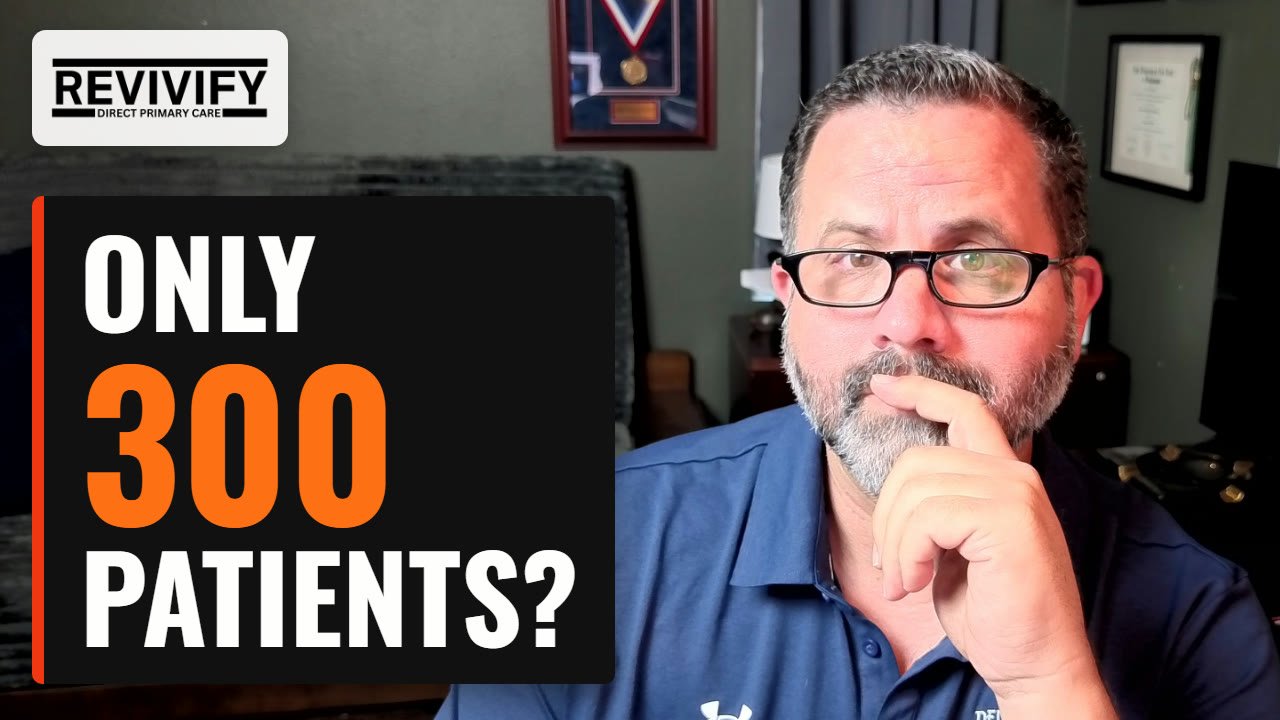
I’m Dr. Stephen Daquino. I’ve been a family medicine and primary care sports medicine physician for more than 20 years, and I’ve worked everywhere from big systems to small boutique practices. I’ve seen the way medicine works and I’ve seen the way it doesn’t. November 1st was National Direct Primary Care Day, and it was also the first day of open enrollment for 2027 coverage. So let’s talk about what direct primary care is, how it can fit with your insurance, and why on earth a doctor would stop at 300 patients.
If you’d rather watch than read, the whole thing is in this video.
What is direct primary care?
Direct primary care, or DPC, is a relationship between you and your doctor’s office where you pay a low monthly fee. With me, that’s $129 a month for an adult, $75 a month for a dependent 18 and under, and $375 a month for a family of four. The $200 enrollment fee is waived for now.
You might be thinking, holy cow, he just gave away his prices, nobody does that. But that’s what this is about. You should know what your doctor costs before you need one.
What you get for the monthly fee
Mostly, you get a doctor you can reach. You aren’t filtered through a phone room and then a messaging department, waiting days or weeks for someone to get back to you. You know me, I know you, and you know my staff, which is really small for a reason.
Here’s what that looks like day to day:
- Same or next business day appointments. When you need to see me, you see me.
- Visits that are 30 minutes minimum. No more five minutes and out the door. You have time to ask your questions, feel heard, and get answers.
- More than one way to reach me. You can call, text, email, come in, or do a video visit.
- Low-cost labs and imaging. Typical annual physical labs run less than $75. Lab and imaging prices may vary with time, and they’re set by the laboratory or imaging facility when the test is done outside of Revivify.
- An in-house generic pharmacy. Many common generic medications are available right here at member prices.
Office visits are included, within reason. If you’re coming in every day, we’re going to have a conversation.
DPC is not insurance
This is the part I most want you to remember during open enrollment. DPC won’t pay for that hospital stay or that surgery, so you need to keep an insurance plan for the big stuff.
If you think about it, that’s what insurance was meant for: big, unexpected expenses. We’ve all been trained over the last 30-plus years to think insurance is supposed to pay for everything, including the small, everyday, bread-and-butter things, and that’s a big part of why those costs got so out of control.
So think of these as two jobs. Direct primary care takes care of the regular, routine stuff, like your physicals, your illnesses, and having a doctor who knows you. Your insurance pays for the big, unexpected costs.
How to compare health plans for the whole year
Most people look at the monthly premium and stop there. Sit down with that new policy and add up the whole year instead:
- Premium. Take the monthly premium and multiply it by 12.
- Deductible. Remember the plan doesn’t pay for much until you hit it, so add that on too.
- Copays. Figure out how many times you think you’ll see the doctor this coming year, and add a copay for each visit.
Those numbers start adding up pretty quick.
Now look at a lower-cost plan with a lower monthly premium and a higher deductible. If you’re otherwise healthy, you may never meet that deductible in the first place. So ask yourself: do you save more than $129 a month? Run the numbers for a bad year too, since a higher deductible means you’d pay more before the plan kicks in if something big does happen. A broker can help you decide which plan is right for you.
Open enrollment deadlines to keep in mind
- Covered California: enroll by December 31 for a plan that starts January 1. Open enrollment ends January 31.
- Insurance through your employer: check with your employer about the deadline, and see if you have the option of a lower-premium, high-deductible plan. Those usually fit well with direct primary care.
- Medicare: your dates and rules are different. Medicare open enrollment runs October 15 to December 7, and your plan type matters. I wrote about that in Original Medicare + Direct Primary Care: The Combo That Works.
Why I only take 300 patients
So back to the original question. A doctor in a large system usually has a panel of 2,000 to 3,000 patients. If a doctor sees 1 to 2 percent of a 3,000-patient panel in a day, that’s 30 to 60 patients a day, and that’s insane.
That’s the reason you get a five-minute visit. It’s the reason you’re in and out the door as fast as they can get you there, the reason you never see the same doctor twice, and the reason your doctor doesn’t know you as well as he or she should. Big systems are based on volume.
When I hit 300, I stop. That gives me the ability to pay attention to my patients and get to know you. It lets me see you quickly and gives me time to take care of the small things. This isn’t a new concept. This is the way medicine used to be.
Is direct primary care a good fit for you?
It tends to make sense if you want one doctor who knows you and your family, you’re tired of waiting weeks for a short visit, and you’re willing to look at your insurance as protection for the big stuff. It’s worth a closer look if you’re otherwise healthy and paying a lot for a plan you barely use.
It isn’t a replacement for insurance, and it won’t be the right call for everybody. How it fits depends on your plan, your health, and your budget, and that’s a fine thing to talk through before you sign up for anything.
How to find out more
Go to revivifydpc.com. There’s a button there for a free Meet & Greet, a 15-minute video visit where I answer any questions you have about direct primary care and we find out if it might be a good fit for your family. It’s informational only and isn’t a medical visit, so please don’t share private medical information.
The full explanation is in the video on YouTube. If you have questions, leave them in the comments there. I look forward to meeting you.
General information only, not medical or insurance advice.
← Back to all posts